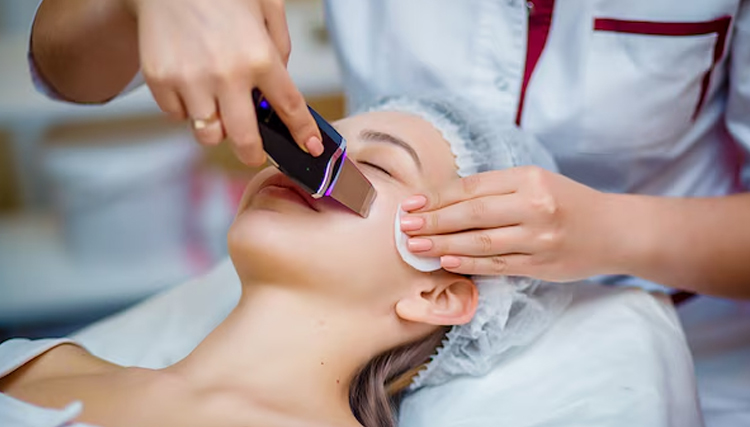

Peeling is a procedure that helps remove dead skin cells that accumulate on the surface of the skin. The skin renews itself every 30–56 days, a process known as epidermal turnover. When dead cells remain on the surface for a prolonged time, dryness, flaking, and dullness may occur. Peeling supports the removal of this layer.
Peelings are classified according to their content as mechanical, chemical, and enzymatic, and according to their penetration depth as superficial, medium, and deep.
Mechanical Peeling
One of the mechanical peeling methods, dermabrasion, uses diamond-tip handpieces or devices that spray aluminum oxide microcrystals under controlled pressure.
This approach creates controlled superficial abrasion, supporting the natural regeneration of the skin.
Uses include:
- Surface irregularities
- Fine line and wrinkle appearance
- Acne and scar marks
- Hyperpigmentation concerns
Chemical Peeling
Chemical peeling involves applying one or more chemical agents to the skin to create controlled exfoliation at specific layers of the epidermis. The agent is selected based on the individual’s skin needs.
Common chemical agents include:
- Glycolic acid
- Salicylic acid Lactic acid
- Mandelic acid
- TCA
- Jessner’s solution
- Enzymatic peeling complexes
Enzymatic components such as azelaic acid, kojic acid, ascorbic acid, and phytic acid may help improve tone irregularities by inhibiting the tyrosinase enzyme involved in melanin production.
Chemical peelings must be performed by trained professionals, with the level of depth determining whether it is carried out by a specialist or healthcare provider. Authorization is regulated by health authorities.